

At Doinmedia, we are firmly committed to making our audiovisual and animation productions more environmentally friendly and to ensuring they have a positive impact on our community.
We recognize that all industries have an environmental footprint, that sustainability is a growing global trend, and that an increasing number of bids and business opportunities require social and environmental responsibility certifications.
We want to share what we at Doinmedia are exploring in this area—our progress and the day-to-day challenges we face.We’re not sustainability experts; we’re a team experimenting with the aspiration to become more sustainable every day.
A Client That Gave Us a Nudge.
While we’ve been designing sustainable business processes and actions for years, in 2024, Novo Nordisk invited us to participate in an assessment program with Sistema B.
This initiative, directly supported by Sistema B and with specialized consulting from Arco, provided us with the necessary insights and concepts to understand the scope, challenges, opportunities, and benefits of implementing sustainable policies and processes—and even more so, of a certification process.
We also managed to identify the areas and metrics with the greatest potential, which we would prioritize as a starting point.
Along this path, we’ve researched what’s being done both within and outside the audiovisual sector, seeking answers to questions like:
- How can we generate less waste on our shoots?
- How do we measure the energy used by different remote-working teams?
- How do we measure and offset our carbon footprint?
- How do we keep environmental impact in mind when bringing our stories to life?
- How do we involve our clients, employees, and suppliers in these processes?
In short, how can we make audiovisual production more sustainable?
Guidance from the Bogota Film Commission.
We discovered that in 2022, as an initiative of the Bogota Film Commission, the “GUIDE TO SUSTAINABLE PRACTICES IN AUDIOVISUAL PRODUCTION: A path towards green productions in Bogota” was edited and published.
You can find it here: https://filmingbogota.gov.co/node/4227
This document was a collaborative effort involving several entities: the Audiovisual Arts Management of the District Institute of the Arts – Idartes, the District Secretariat of Environment of the Bogota Mayor’s Office, the Creative Industries Cluster of the Bogota Chamber of Commerce, and the Colombian Film Commission (Proimágenes Colombia).
This guide is not just an informational document, but a practical roadmap for integrating sustainability into every stage of audiovisual production, from planning to post-production. It acknowledges that the transition to sustainable practices is a gradual process.
The guide offers clear, actionable recommendations to minimize the environmental impact of filming in Bogota.
Where to Start? The guide emphasizes planning and management as fundamental pillars.
This includes considering aspects like responsible procurement, designing environmental guidelines, and a_nd the proper setup and disposal related to_ infrastructure.
It’s not about radical, overnight changes, but about identifying key areas where progressive improvements can be made. The guide addresses various areas for implementing sustainable practices:
Efficient Paper and Printing Use: Encouraging reduced consumption and prioritizing digital options.
Energy Use Optimization: Promoting renewable energy sources, energy-efficient equipment, and smart lighting management on set.
Responsible Water Management: Offering tips to minimize consumption and properly manage wastewater.
Proper Waste Management: Urging source separation and recycling, as well as correct disposal of special waste like batteries and film materials at designated post-consumer collection points.
Sustainable Logistics: Suggesting efficient transportation options and reducing the carbon footprint of team travel.
Sustainability in Post-Production: Addressing the efficient use of resources like water and energy.
The guide recognizes that adopting sustainable practices is a challenge requiring discipline, support, and, above all, the commitment of the technical and artistic team. It’s about a collective transformation where documenting the process, collecting data, and analysis are crucial for developing a long-term management plan.
Our Trials and Learnings.
At Doinmedia, we’re applying recommendations we consider cross-cutting for all production departments.
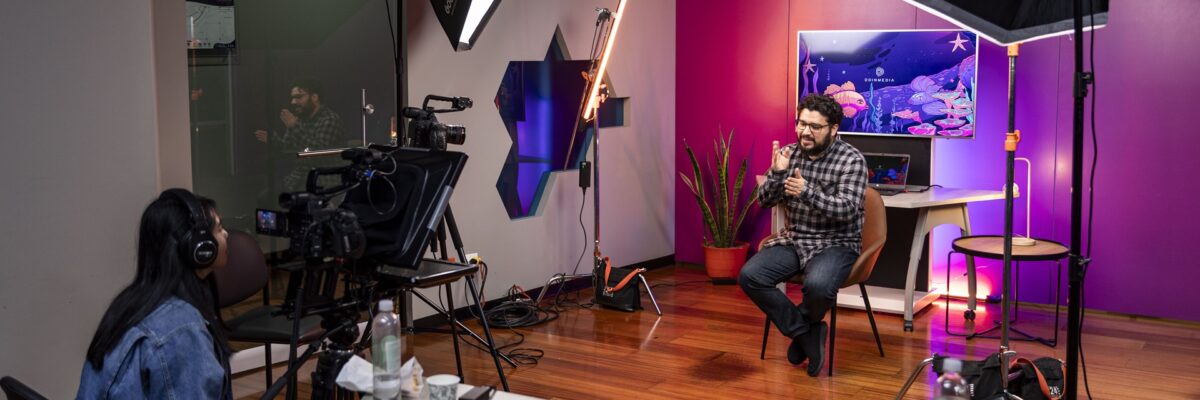
Grabación de Doinmedia
Less Paper: One of the first things we did was reduce paper use. We’re committed to digitizing documents as much as possible, and when printing is unavoidable, we prioritize recycled paper and the minimum number of copies.
Energy and Equipment: We are also exploring how to prioritize the use of efficient equipment. This translates into capacity, upgrades, and investment in technology to make processes faster. This is an area where we are still learning about the best available options and how to integrate them without affecting production timelines or technical quality. One of the main challenges has been standardized measurement, as a large part of our team works remotely.
Production Planning and Management: Everything starts with planning. A concrete action we’ve implemented is ensuring recycling infrastructure is available on set and providing training to the team.
Understanding what is compostable, reusable, recyclable, and ordinary waste isn’t as easy or intuitive as it might seem. Understanding materials leads us to seek suppliers and inputs that meet specific characteristics to facilitate this process.
We are in the process of creating a robust sustainability plan at Doinmedia to guide our decisions, and we have updated our mission, vision, and values, integrating a sustainable outlook at the heart of our strategy.
Sustainable Catering: We are actively promoting the use of reusable or planet-friendly cutlery and cups. We’re also making an effort to serve fresh, healthy food from local suppliers, adjusting portions to reduce leftovers, and avoiding processed, packaged foods as much as possible.
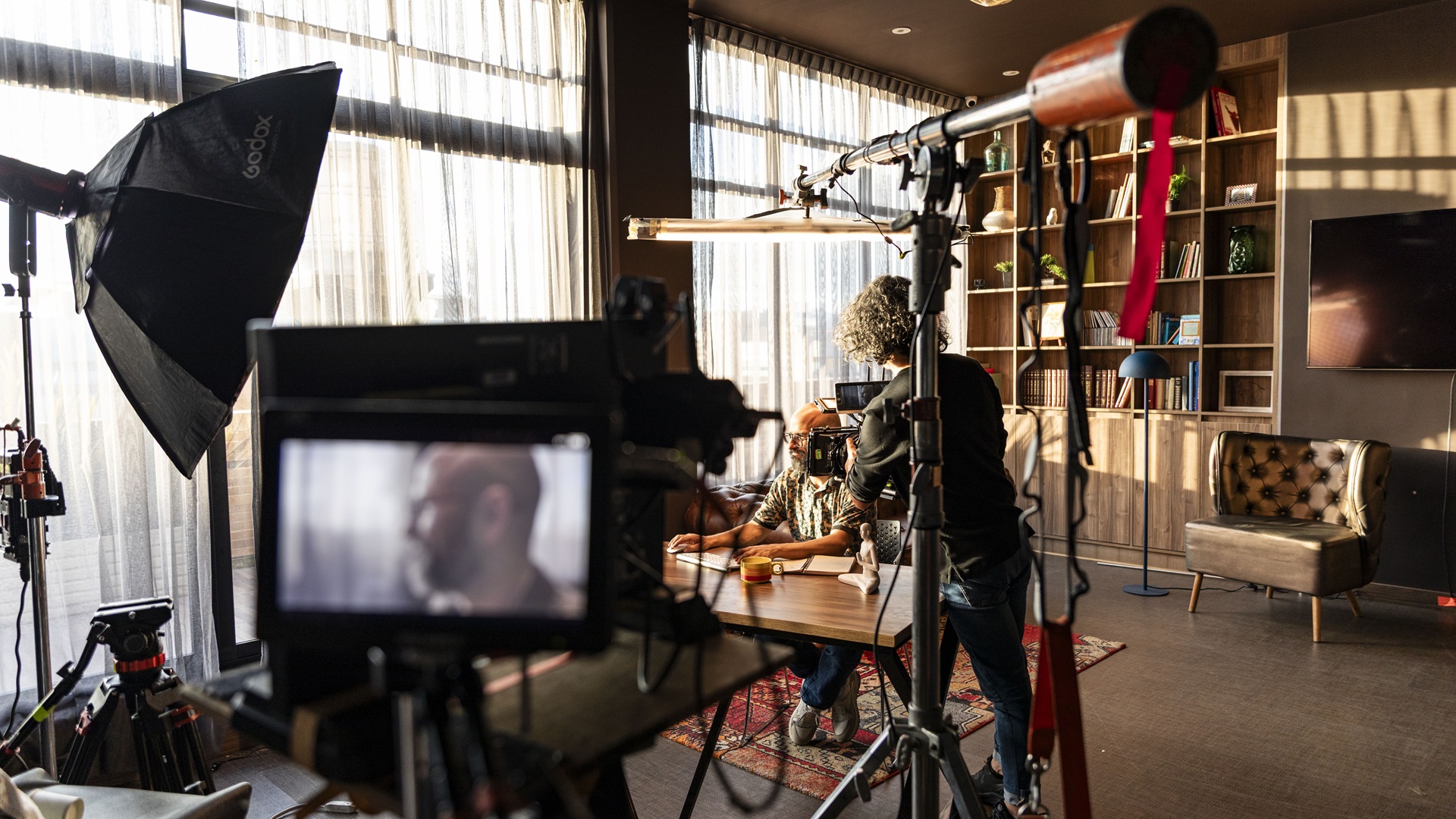
On a recent shoot, we brought a catering team directly to the location to prepare food for the crew. In this instance, the location allowed for it, and the costs were favorable. It turned out to be a great test where the team received excellent service, fresh and hot food, without generating cutlery or plate waste.
We are currently defining and refining our process indicators and metrics and constantly encouraging our team to think and plan autonomously and proactively about how simple, everyday practices can be implemented.
Implementing these practices is a constant trial-and-error process. We’re discovering how feasible certain actions are within the fast pace of a shoot, with an interconnected remote team, and how to adapt them to our reality.
We share our experience because we believe every small step counts. By implementing these practices and adjusting them as we learn, we are contributing to a more sustainable audiovisual future.
We are also open to dialogue and learning from the experiences of other companies and colleagues. We are still learning and experimenting!